Updated April 20, 2026 · PrintableTips for Communicating With Your TeenChild Mind Institute
Simple ways to open conversations, listen without immediately trying to fix things, and keep communication going.
 24/7 Wellbeing Coaching for Youth
Sonar gives young people 24/7 access to trained Wellbeing Coaches. Families get clear information about how the service works, help for difficult moments, and resources chosen by our team.
Three things families ask about first: who is on the other side of the conversation, what stays private, and what happens when we are worried about safety.

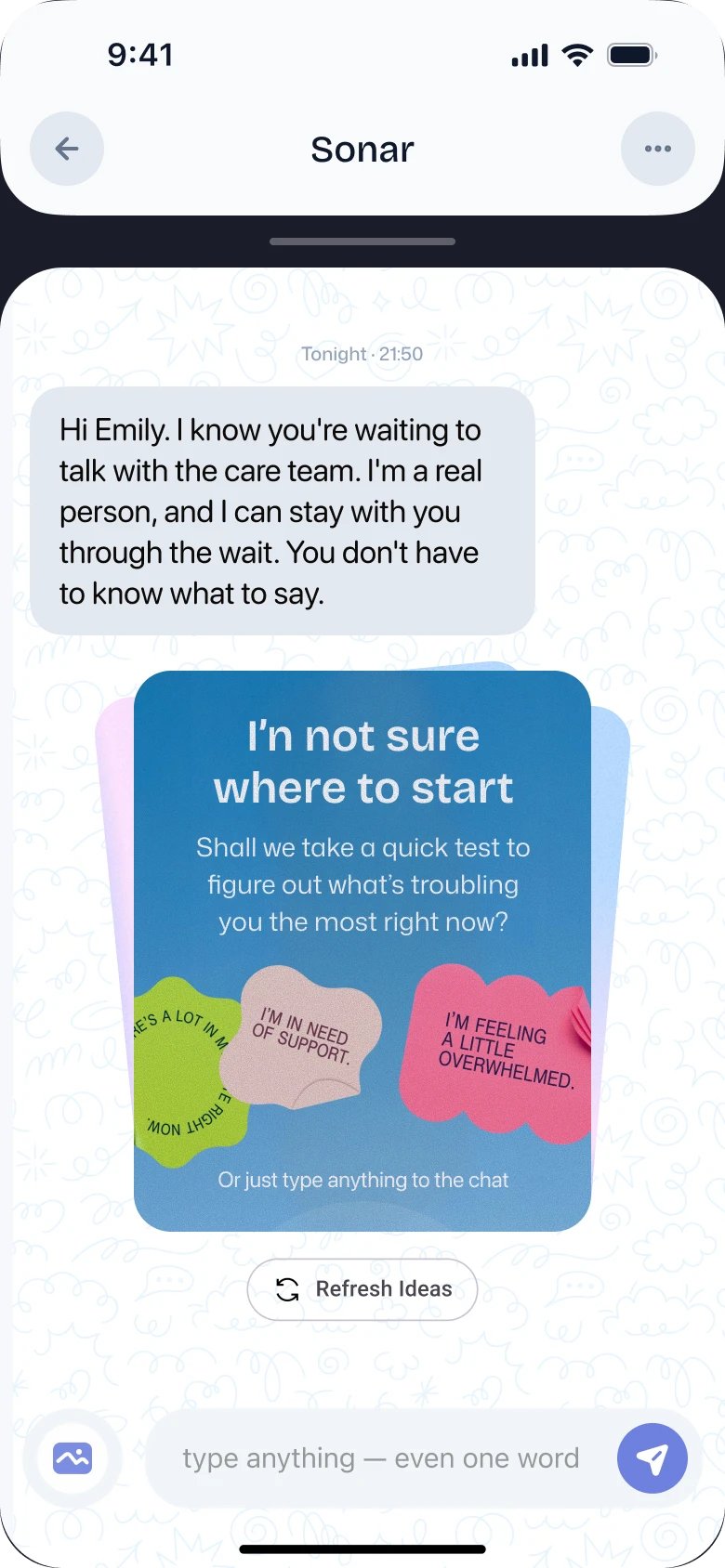
Young people can message a trained Wellbeing Coach whenever something is on their mind. They might reach out about school pressure, friendships, a breakup, loneliness, or simply a difficult day.
Available 24/7. Always human. Support that grows over time.
Every Sonar conversation is led by a trained Wellbeing Coach selected for their ability to connect with young people and make sound decisions when situations become more complex.
Coaches come from backgrounds such as psychology, social work, and youth programs. They do not manage complex or high-risk situations alone: each Coach receives ongoing feedback, conversation review, and real-time guidance from Sonar’s Clinical Governance and Safety Team.
Sonar gives young people a private place to talk. It also gives parents and caregivers helpful ways to stay connected and find trustworthy information to support their kids.
01Some moments are harder to navigate than others. Your child shuts down. An argument becomes something bigger. You can tell something is wrong, but don’t know how to broach it.
AI Parent Guide is a sounding board to help you think through what to say and do next. Share what’s happening, add a little context, and receive tips grounded in curated, expert-reviewed research.
Try AI Parent GuideAI Parent Guide is a separate AI-powered tool for adults. It does not provide access to your child’s private Sonar conversations and does not replace professional or emergency support.
The Family Resource Hub brings together articles, guides, and tools from trusted organizations. These free, expert-created resources can help you start conversations and connect more with your child.
If your child is in immediate danger, go to the nearest emergency room. For immediate crisis support, call or text 988.
When your teen says “I’m fine,” it can be hard to know whether to keep asking or give them space. These resources offer ways to make conversations feel easier.
Simple ways to open conversations, listen without immediately trying to fix things, and keep communication going.
Free, five-minute lessons designed to help caregivers strengthen relationships and support their child’s emotional development.
Worry can show up in many ways, from test anxiety to avoiding school altogether. These resources can help you respond with support without unintentionally making anxiety stronger.
Guidance for helping an anxious child face difficult situations rather than avoiding them.
Information about how anxiety can look in teens, including school anxiety, school refusal, and signs that additional support may be helpful.
Every child has difficult days. These resources can help you understand when a low mood may be something more.
Learn how depression can look different from typical teenage moodiness and what changes to pay attention to.
Guidance for listening, showing support, and helping your teen connect with appropriate care.
A structured symptom checker that can help a teen reflect on what they have been experiencing. It is not a diagnosis.
Technology is part of everyday life for most families. These tools can help you set realistic expectations around media use.
An interactive tool for creating a personalized family plan around devices, media, sleep, and time together.
Parent guidance based on the AAP’s 5 Cs framework, multilingual tip sheets, and answers to common questions about social media and youth wellbeing.
Finding the right care and navigating school accommodations can feel overwhelming. These guides explain how to advocate for your child.
An overview of what mental health treatment can involve, how to evaluate your options, and what good care should look like.
A clear comparison of two common types of school support, including who qualifies and what each plan can provide.
If your child is talking about suicide, self-harm, or feeling unsafe, take it seriously. These resources can help you recognize warning signs and begin a direct conversation.
Common warning signs to watch for and guidance on asking directly about suicide. Asking does not put the idea in a child’s mind.
Clear steps to take if you are concerned that your child may be thinking about suicide.
Learn how a safety plan can help a young person recognize warning signs, identify coping strategies, and know who to contact during a difficult moment.
Information about why young people may hurt themselves, how to respond without judgment, and when to seek additional support.
A concise overview of risk factors, warning signs, prevention, and treatment.
Nonjudgmental guidance for making firearms less accessible when someone may be at risk.
Who the Coaches are, what stays between your child and their Coach, what happens when safety is at stake, and how a family gets access.